

The Secure Bond:
Why Feeling Safe, Seen, and Soothed Matters for All of Us
Some people move through relationships with a quiet kind of confidence. They stay grounded during conflict, express their needs openly, and support others without losing their own footing. Often, this comes from what’s known as a secure attachment stance.
Secure attachment isn’t something fixed at birth—it’s something that can be nurtured, strengthened, and even rebuilt over time.
In this week’s episode of The Bonded Podcast, we explore what secure attachment really means, how it’s formed in childhood, and how it shows up throughout our lives.
Your content goes here. Edit or remove this text inline or in the module Content settings. You can also style every aspect of this content in the module Design settings and even apply custom CSS to this text in the module Advanced settings.
What Is Secure Attachment?
At its core, secure attachment is about feeling safe enough in relationships to be your full self. It gives us a solid foundation to build healthy connections, navigate conflict, and ask for help when we need it.
People with secure attachment often carry these quiet beliefs:
- “I am worthy of love.”
- “Others can be trusted.”
- “Closeness is safe—and so is being independent.”
These beliefs don’t come out of nowhere. They form through consistent, everyday moments with caregivers who show up with warmth, presence, and care.
The 4 S’s
Building Secure Attachment
Psychologist Dan Siegel and Tina Payne Bryson offer a simple but powerful framework to explain how secure attachment is built in early life. They call it The 4 S’s:
#1 – Safe
Children need to feel physically and emotionally protected. When they feel safe, their nervous systems can relax and trust begins to grow.
#2 – Seen
More than just being watched, children need their feelings, needs, and inner world to be noticed and valued.
#3 – Soothed
When distress hits, caregivers offer comfort—not by fixing everything, but by showing up with calm and compassion. This teaches kids how to self-soothe later on.
#4 Secure
With enough experiences of being safe, seen, and soothed, children develop a lasting sense that they are lovable—and that relationships are a safe place to land.
! Important reminder: Secure attachment isn’t about being a perfect parent. It’s about being good enough, consistently, and repairing when you get it wrong.
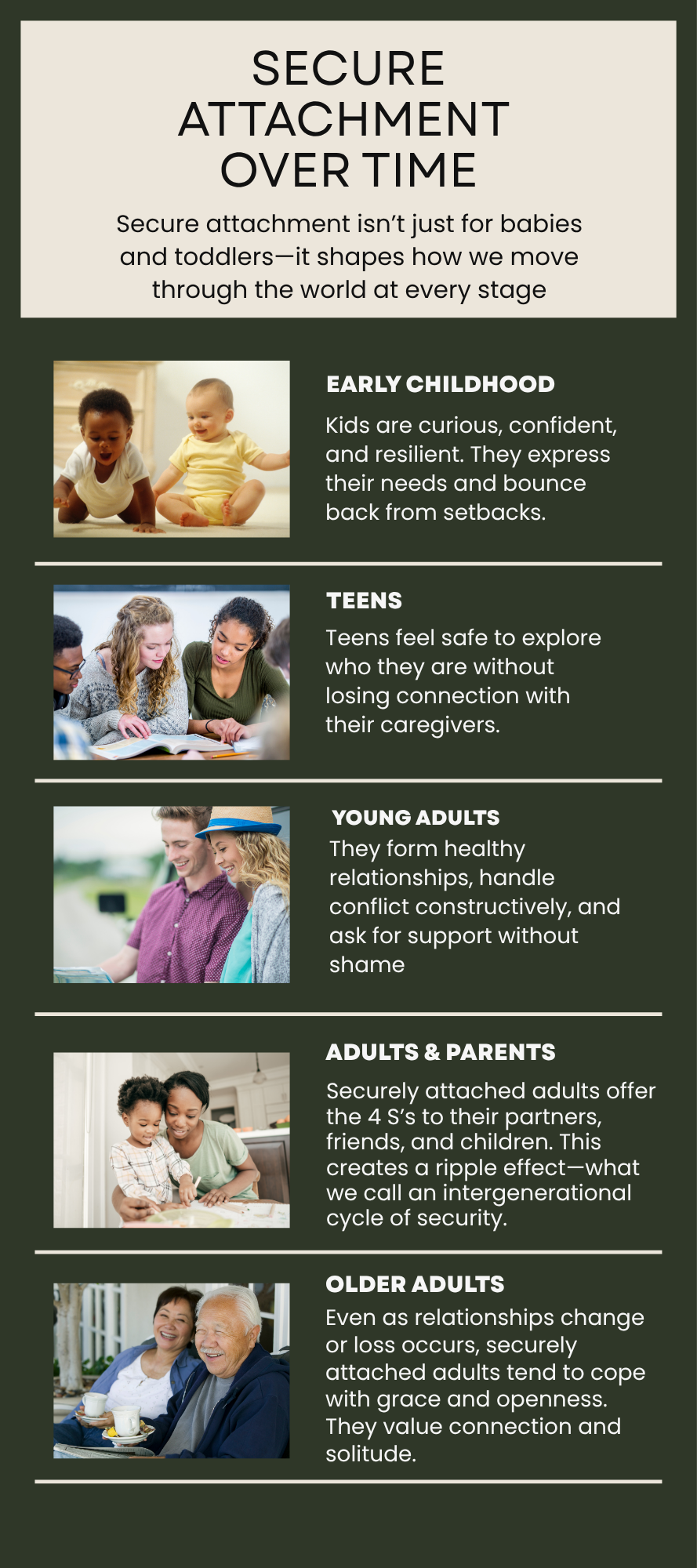
You Can Rewire for Secure Attachment
Here’s one of the most hopeful insights from attachment science: even if you didn’t grow up with the 4 S’s, you can still develop secure attachment later in life.
This is called earned secure attachment—and it’s possible through:
- Meaningful, mindful relationships
- Therapy with someone who gets you
- Self-awareness, mindfulness, and the willingness to heal
You can learn to be your own secure base—and offer that grounded presence to others, too.
In Case You Needed to Hear This Today…
You don’t have to be perfect to build secure attachment with your kids, your partner, or even yourself. Small, consistent moments of warmth, presence, and repair matter more than doing it “right” every time.
🎧 Want to dive deeper? Listen to Episode 2 of the Bonded podcast: The Secure Bond: How Safe, Seen, and Soothed Leads to Secure Attachment. And don’t miss next week’s episode, where we explore what happens when the 4 S’s aren’t met—and how that shapes our attachment stance.
Until then, stay curious. Stay connected. And get bonded each week with us.
NERD NOTES:
Extend your knowledge by reading the reasearch.